
Ontario Estate Trustees Follow These Steps





As a first-time estate trustee or executor, you may feel scared by all your daily tasks. “What to do first?” is a common question. You worry you do not have any experience. But don’t worry; few people have executor experience. Besides, the laws keep changing and each estate has different needs.
I can help you if you are an estate trustee.
You do not have feel overwhelmed. Google may offer all kinds of checklists to help you if you’re an executor. Often these providers are not dealing with Ontario laws. They may offer checklists that are generic and do not review the specifics in any will or Ontario laws that you must follow.
Without a will, you need to hire a lawyer to apply in court to be appointed as an estate trustee.
If there is a will you may be concerned about where to spend your time. You may feel overwhelmed by all the new tasks and terminology.
I have broken down the estate administration process into 3 phases (protect, probate and pay) as set out in the infographic below.
This graphic breaks down estate administration into 3 phases. You do not have to panic or feel you have lost direction over the 1 – 2 years or more that it may take to close an estate.
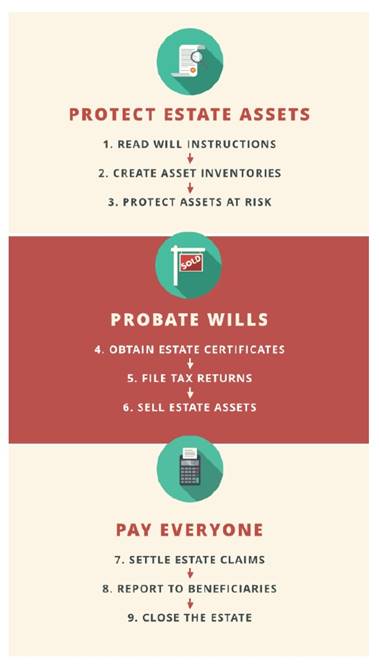
Simple terms like opening and closing an estate may sound confusing. But only in Hollywood is there a formal reading of the last will in a lawyer’s office. Closing an estate means paying everyone, including the tax department.
Check out my Ontario Executors Glossary where I explain more terms that executors need to know.
The term probate was previously use to describe the process when the court validated an original will. Probate confirmed who the executors and beneficiaries were. Back then an estate executor would probate a will to collect and sell estate assets.
This estate terminology changed in Ontario in 1995. If you are named in a will as an executor, you would no longer apply for letters of probate to handle an estate. Instead, you would have a lawyer apply for a certificate of appointment of an estate trustee with or without a will. If there was an intestacy (no will), you receive a certificate of appointment of estate trustee without a will.
Most places continue to use the term probate. People understand probate’s negative connotations relating to provincial probate fees or probate taxes. People go through a lot of trouble to try and avoid having to probate an estate. These attempts can often lead to court cases that can drain estates of cash.
If there is no will, Ontario laws dictate who oversees an estate, who inherits and when. There is no room for variation and no provisions are made for anyone’s special needs or special assets. There is no tax planning if there is no will. You may need a court lawyer to appoint you as the estate trustee without a will.
How to Get Started
Need help during your journey as an Ontario estate trustee? Contact me for a meeting. I have helped estate trustees for decades to solve estate issues by going to court or through mediation.
I can offer you a meeting to discuss your needs by Zoom or in-person in my Toronto west-end office. Arrange your no-obligation meeting today to avoid making any scary mistakes.
I am a Certified Specialist in Estates and Trusts Law. I can give you expert tips to end your estate worries.
Posted In: Estates, Executors On: March 11th, 2026 416 769 - 9800